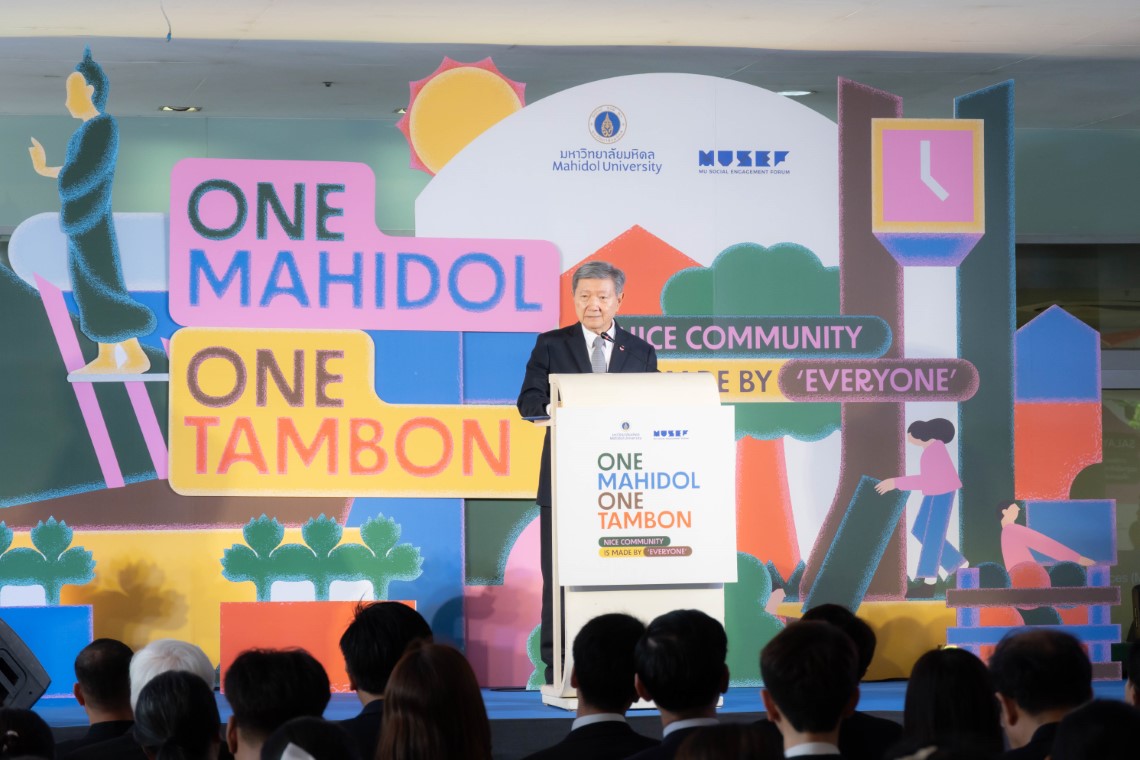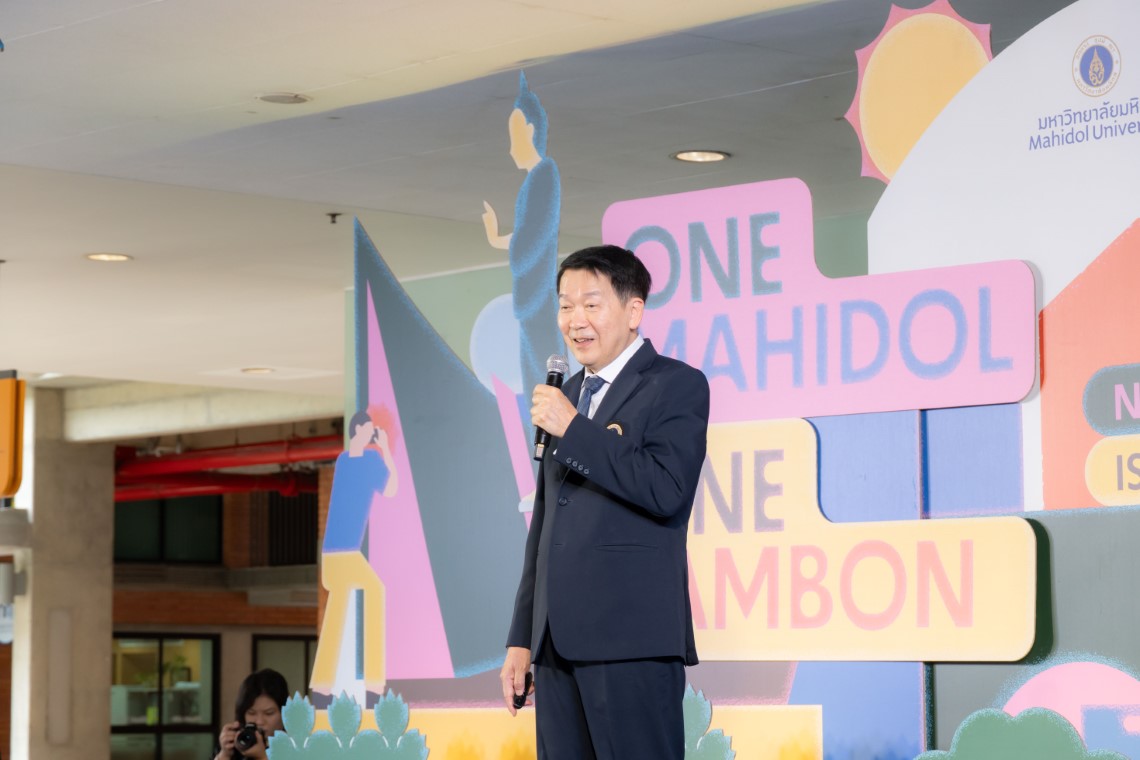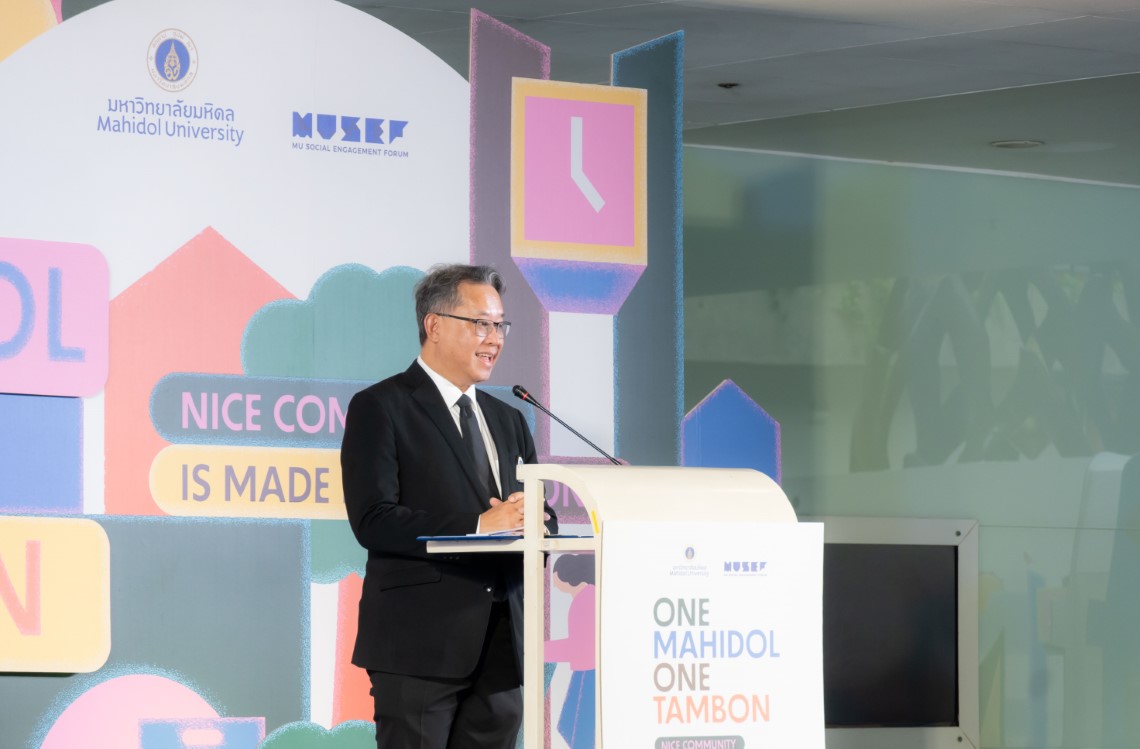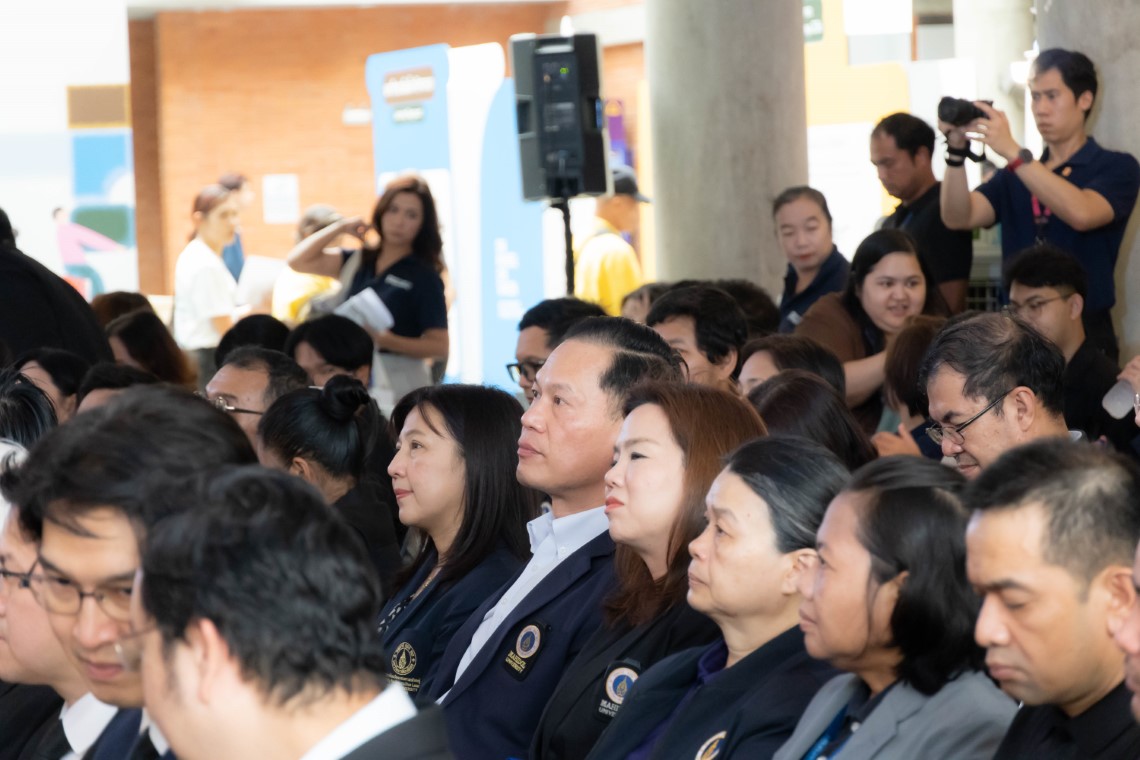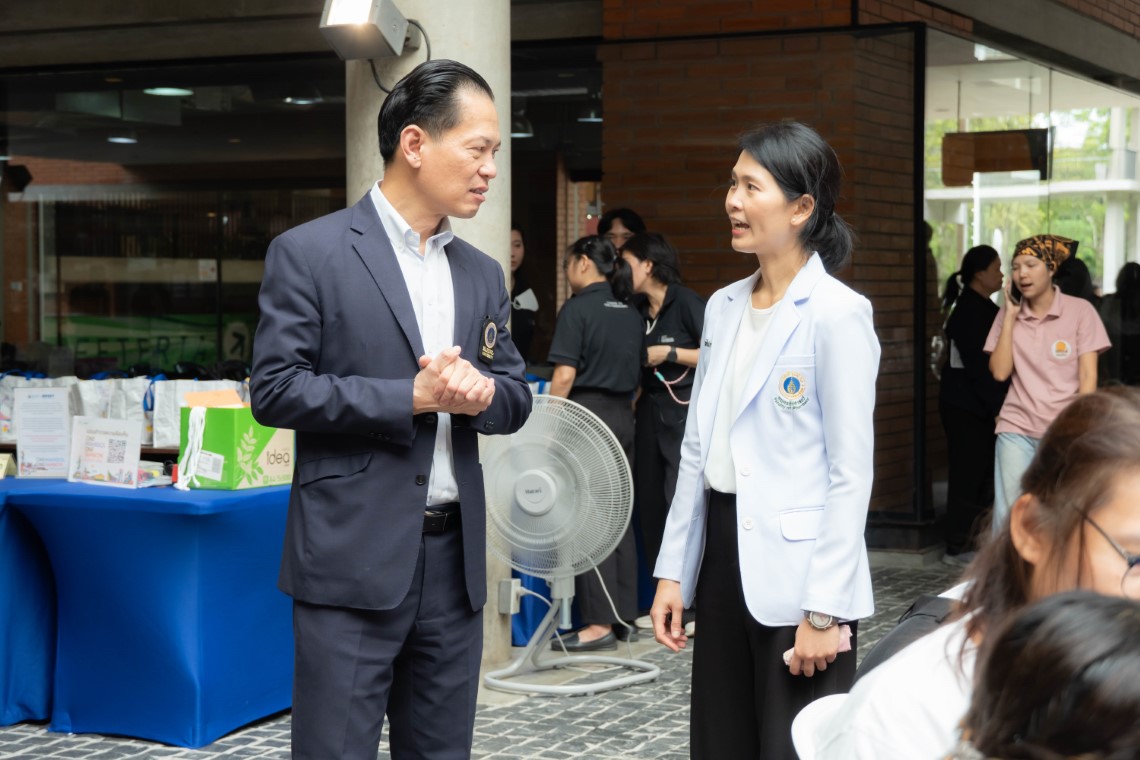
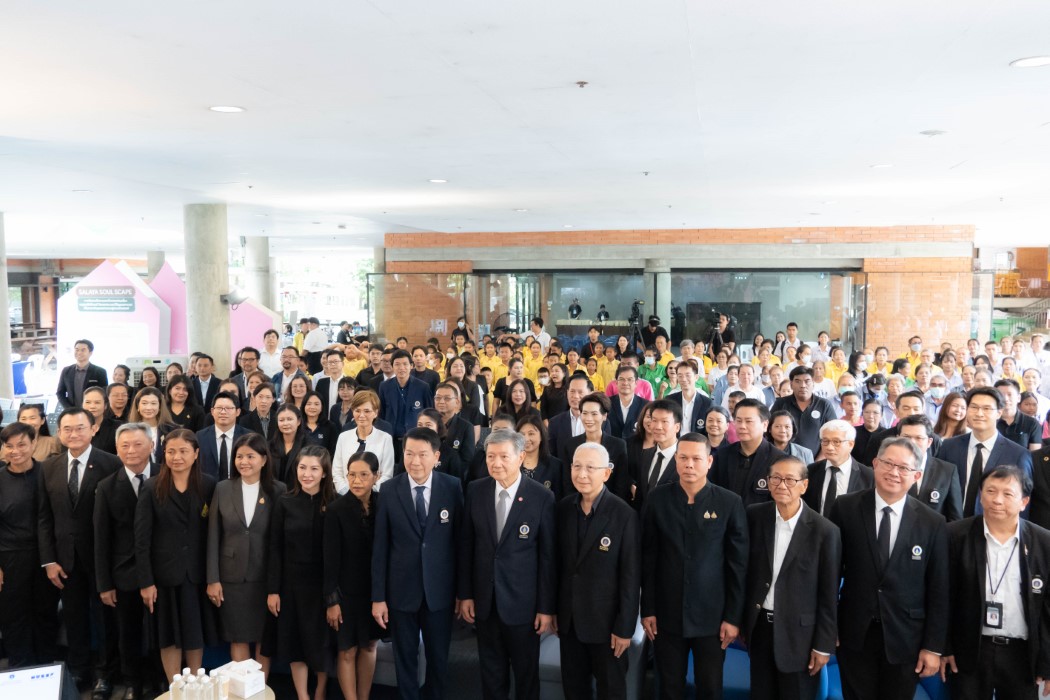
On August 27, 2026, Dr. Pattanasak Mongkolwat, Dean of the Faculty of Information and Communication Technology, Mahidol University (ICT Mahidol), participated in the “One Mahidol One Tambon Kickoff 2026” held at Kanpai Court, Mahidol Learning Center (MLC), Mahidol University, Salaya Campus.
The event was presided over by Clinical Professor Emeritus Piyasakol Sakolsatayadorn, M.D., Chairman of the Mahidol University Council. Professor Dr. Sompop Prathanturarug, Vice President for Strategic Planning, Quality Development and Social Engagement, Mahidol University, delivered the report, while Professor Piyamitr Sritara, MD, FRCP, President of Mahidol University, addressed the University’s role in advancing its social engagement mission. The event was attended by executives, faculty members, staff, representatives from various Mahidol University divisions, as well as relevant organizations and partner networks, with the shared goal of advancing the development of Salaya Subdistrict through the integration of multidisciplinary knowledge and expertise.
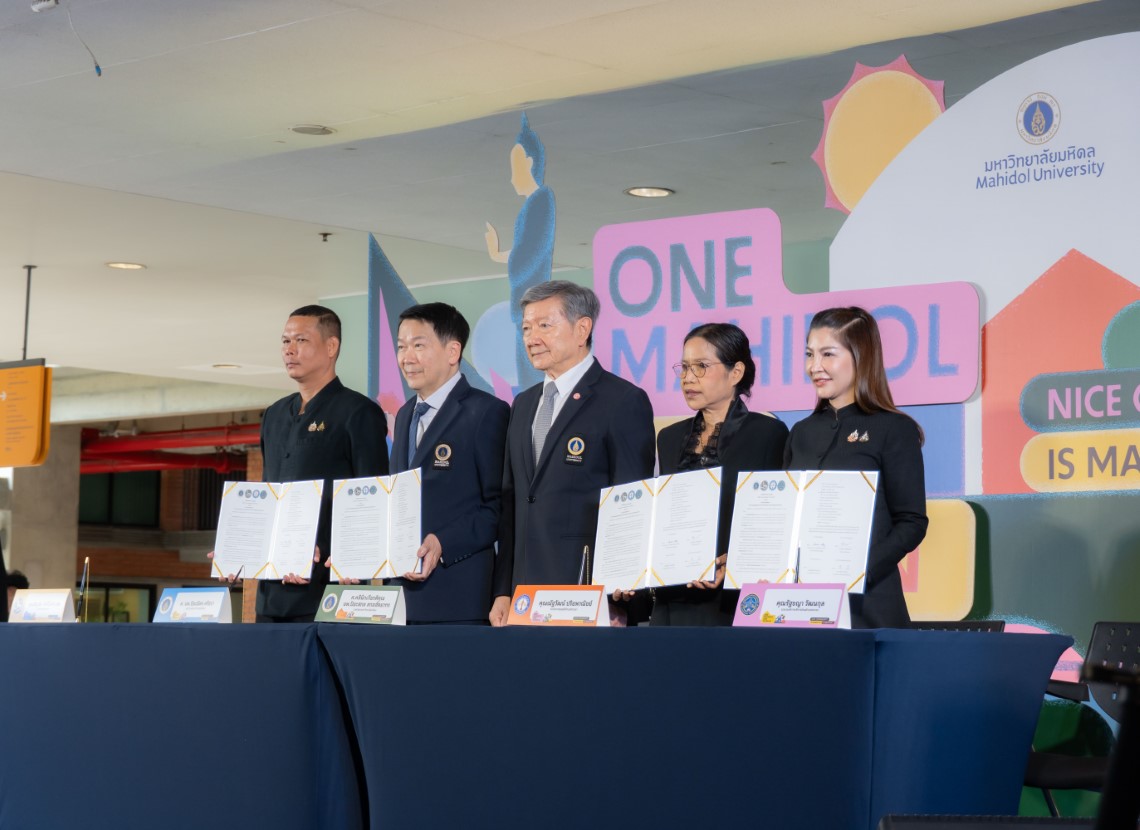
The event also featured the signing of a Memorandum of Understanding (MOU) for the One Mahidol One Tambon Project between Mahidol University, Phutthamonthon District Office, Salaya Municipality, and Salaya Subdistrict Administrative Organization. The collaboration aims to promote a co-creation approach between the University and the local community, applying knowledge, research, and innovation to improve the quality of life of people living in communities surrounding the University in a concrete and sustainable manner.
The One Mahidol One Tambon Project is one of Mahidol University’s key strategic initiatives to translate knowledge, research, and innovation into sustainable development. The project aims to develop the semi-urban area of Salaya Subdistrict as a model University–Community Living Lab, where the University, local communities, and partner networks can jointly learn, design, and develop the area. The initiative covers five key dimensions: education, health, environment, society, and livelihoods.