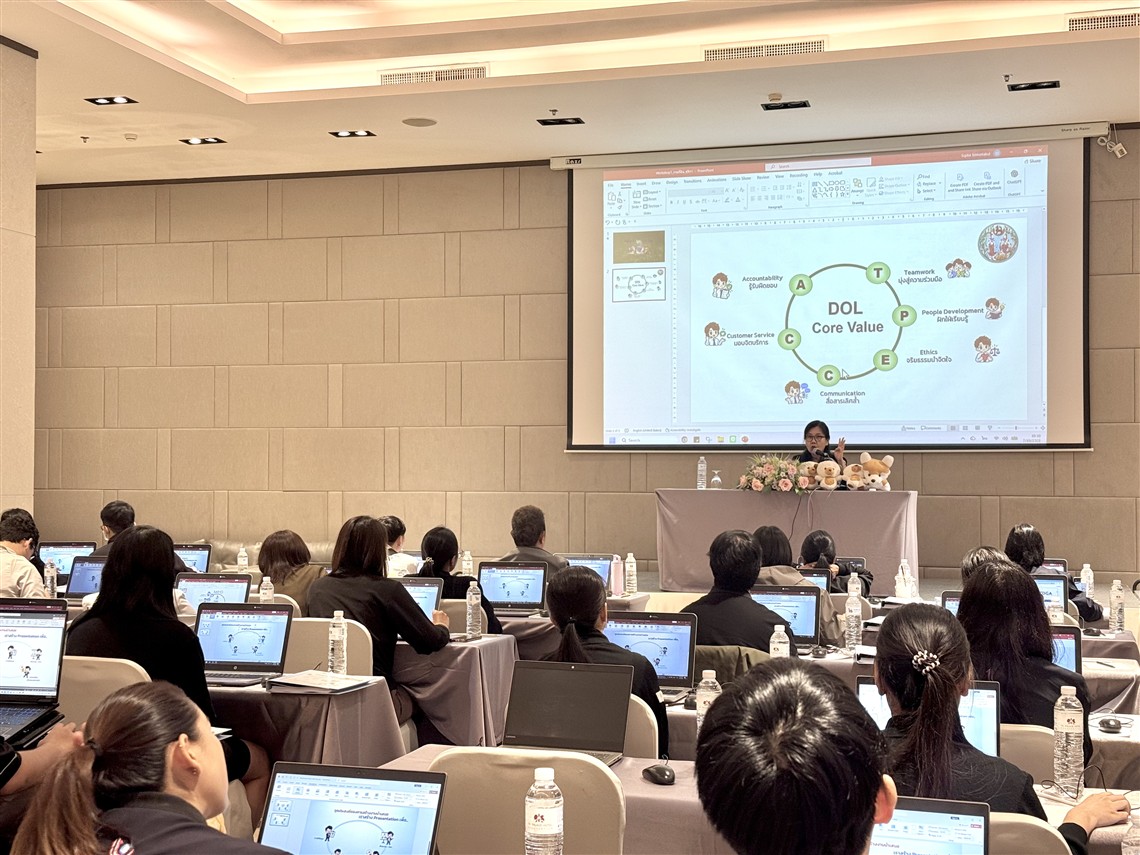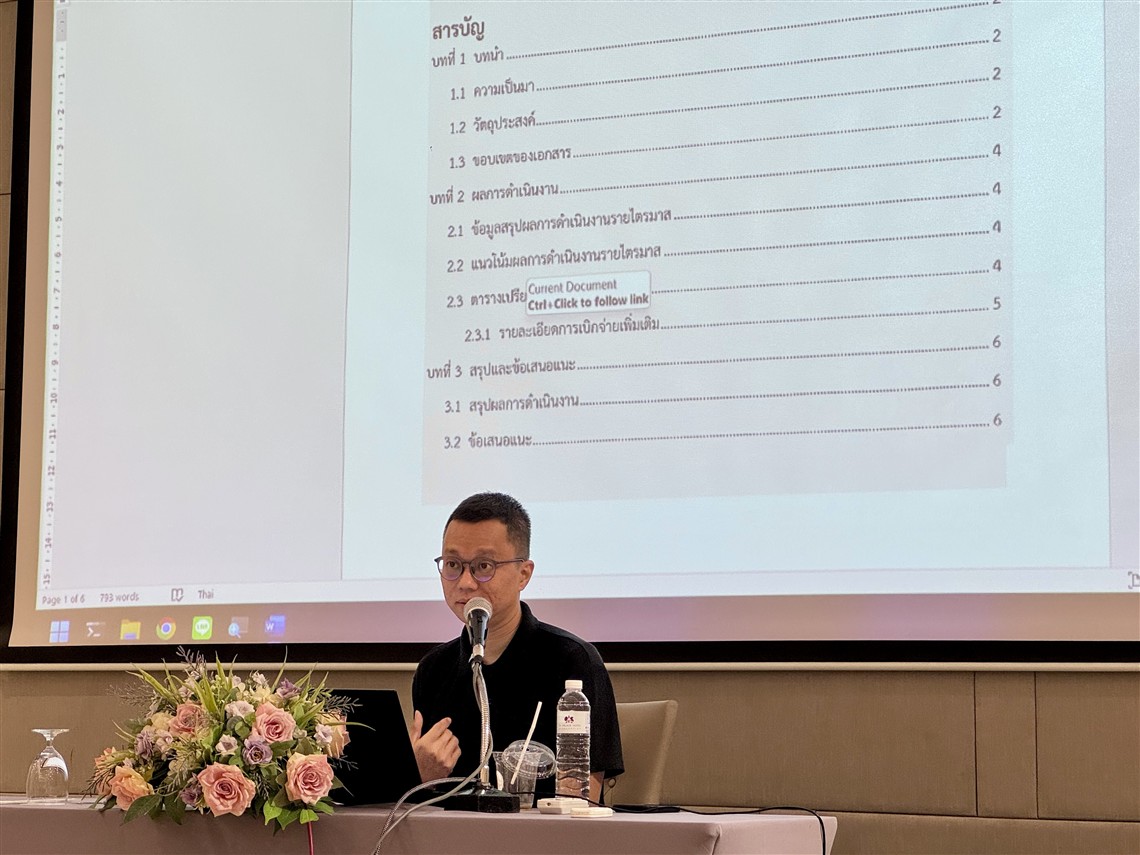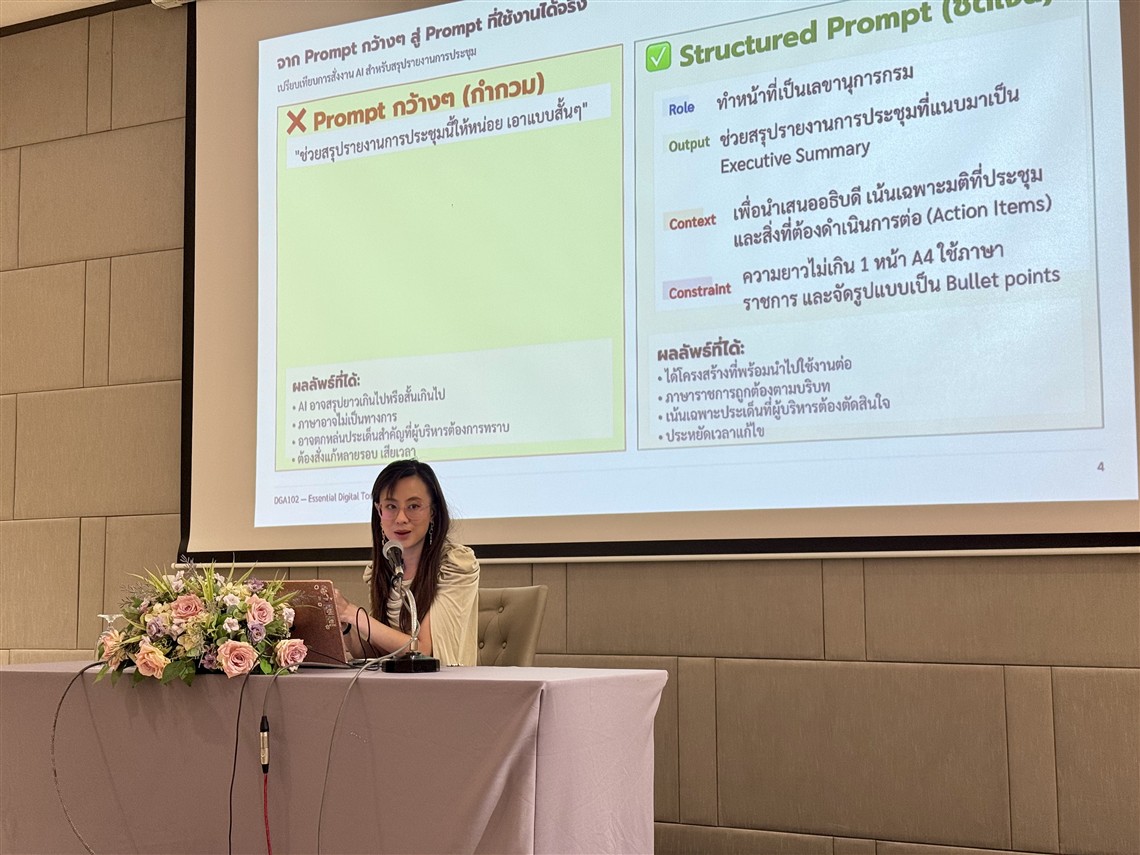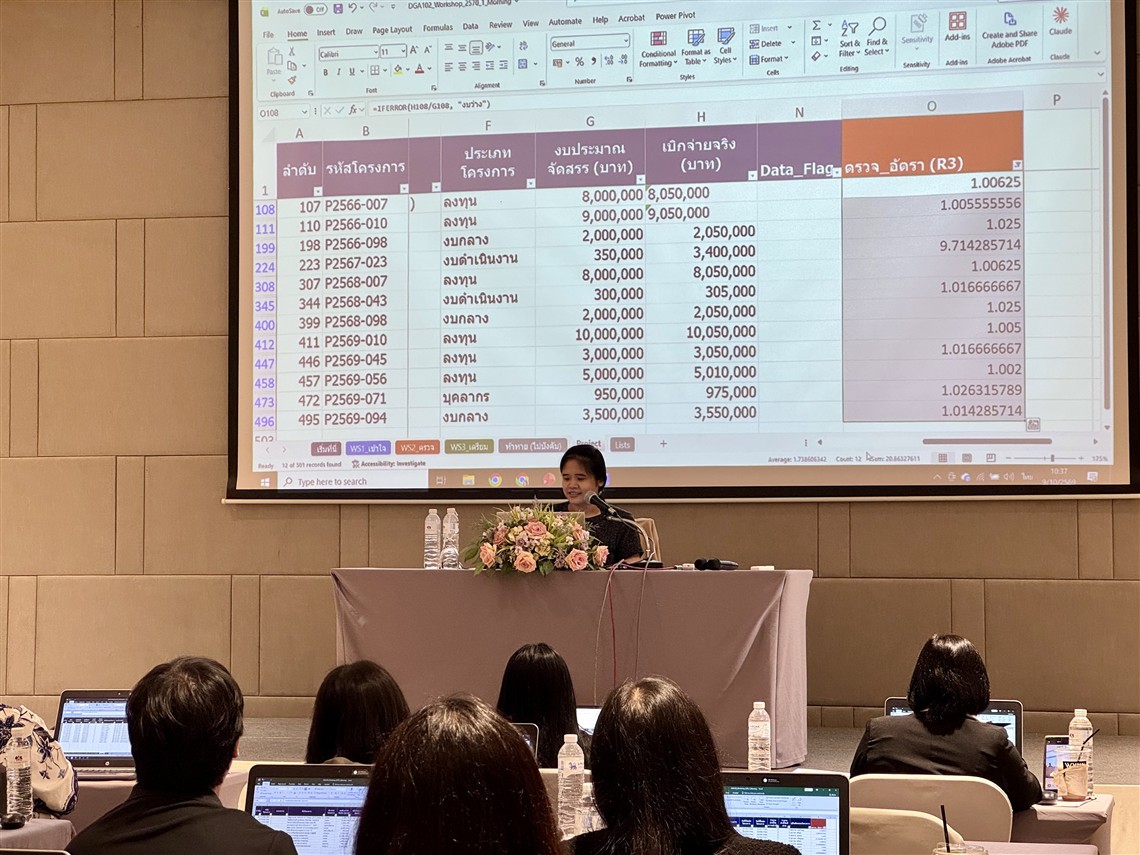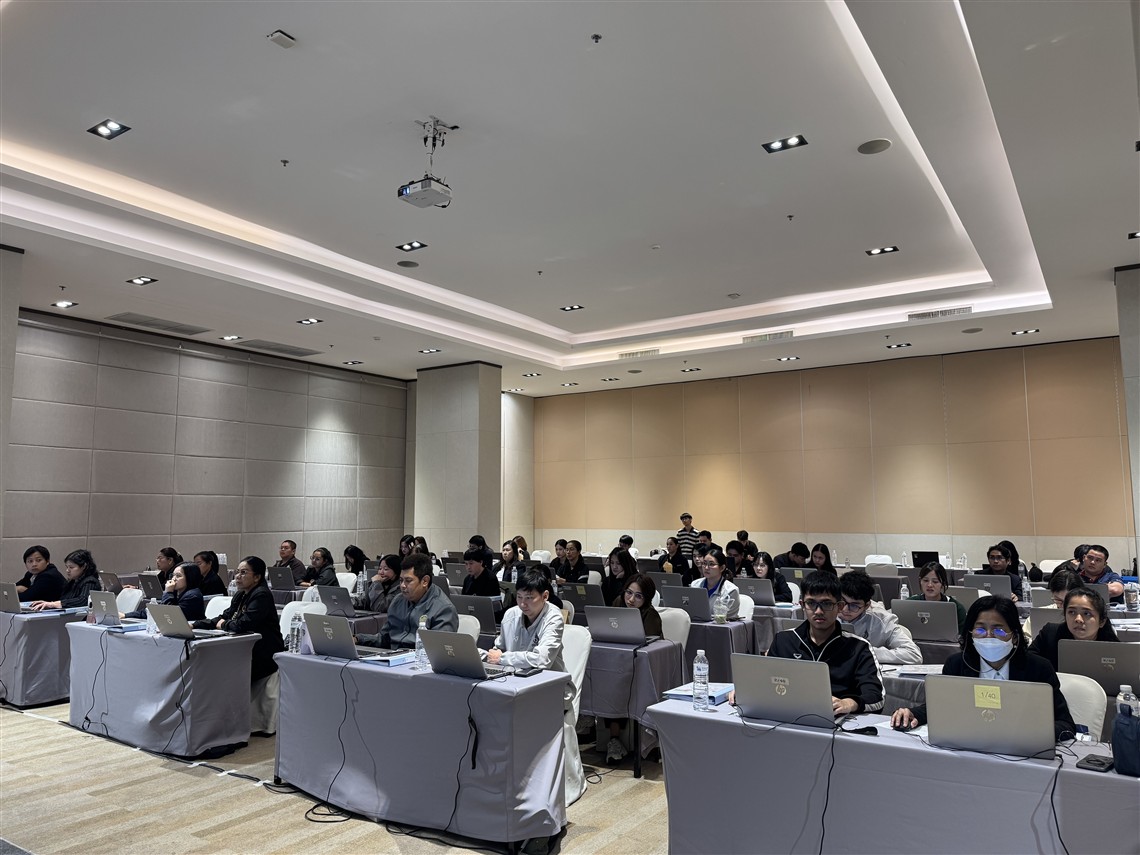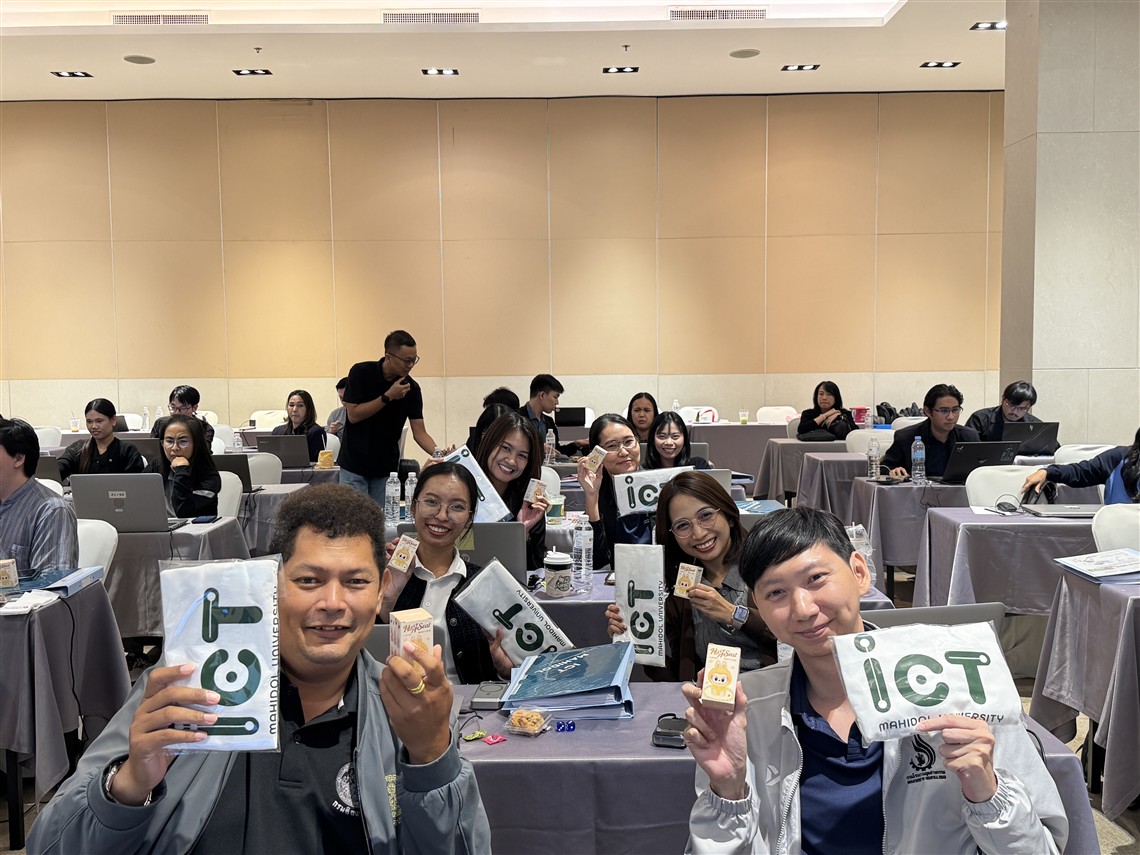
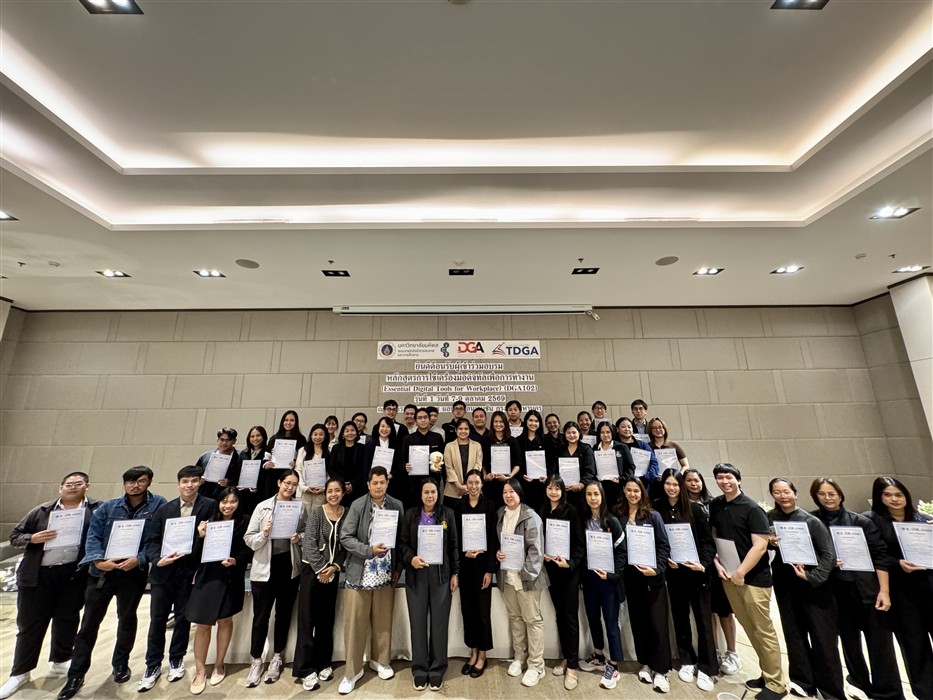
From October 7-9, 2026, the Faculty of Information and Communication Technology, Mahidol University (ICT Mahidol), in collaboration with the Thailand Digital Government Academy (TDGA), organized the Batch 1 of “Essential Digital Tools for Workplace (DGA102)” training program for Fiscal Year 2027 for 45 government personnel. The training was held at TK. Palace Hotel & Convention, Bangkok.
The training featured Asst. Prof. Dr. Tipajin Thaipisutikul, Assistant to the President for Research, Mahidol University, and an instructor in the Computer Science Academic Group, together with Dr. Sujika Srinuntakul, Assistant Dean for Quality Development and Knowledge Management; Asst. Prof. Dr. Siripen Pongpaichet, Assistant Dean for Information and Systems; and Mr. Prach Chaisiri, Computer Technical Officer, Information and Systems Division, as instructors. They provided participants with knowledge and practical insights into the application of digital tools to develop essential digital skills and improve workplace performance.
The program was designed to enhance the digital capabilities and competencies of government personnel, particularly non-IT personnel, by equipping them with the knowledge and skills needed to select and apply appropriate digital tools in accordance with their respective work environments. The training covered essential skills in document creation, communication, presentation, data management, data analysis, and data visualization to support data-driven decision-making and operations. In addition, the program focused on the practical application of Artificial Intelligence (AI) and Generative AI to support a variety of work-related tasks, including document preparation, information summarization, meeting support, communication, and data analysis. The training also emphasized the safe and ethical use of technology, data, and AI, with particular attention to cybersecurity, personal data protection, and AI governance. Furthermore, the program promoted a digital mindset, enabling participants to select technologies appropriate to specific problems and work environments and to apply the knowledge gained to design or improve work processes. These applications can help reduce unnecessary steps and duplication, enhance operational efficiency, and contribute to tangible improvements in the quality of public services.