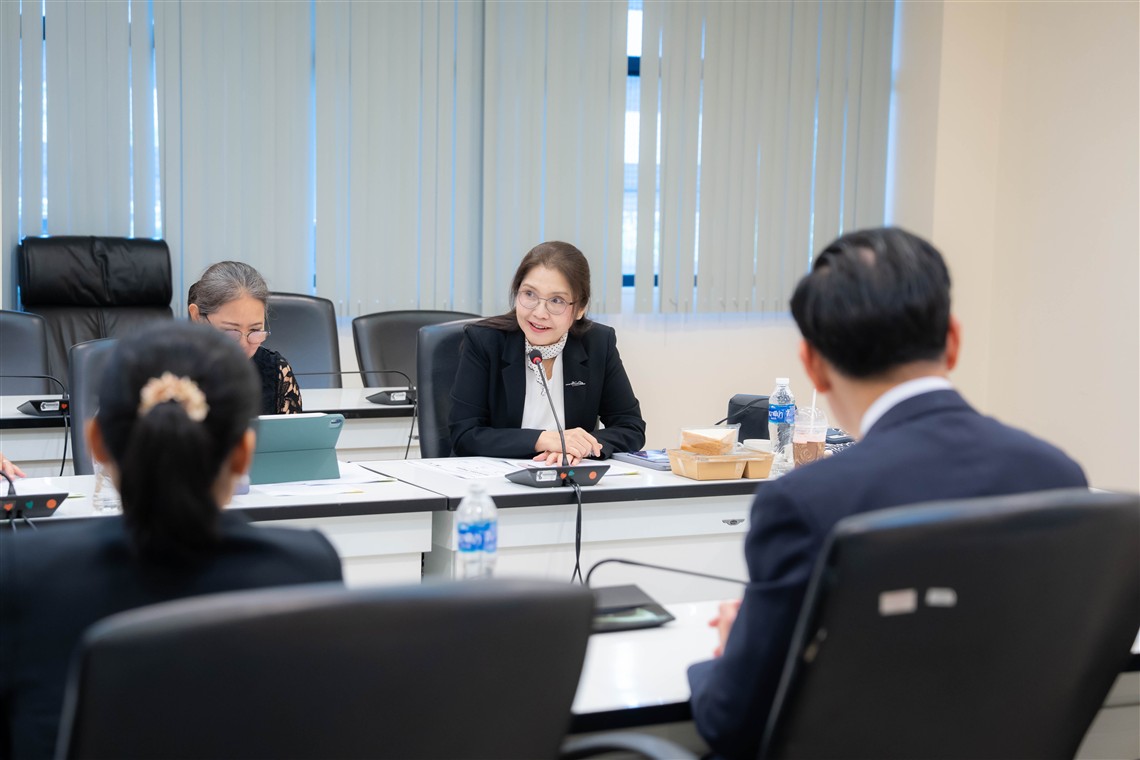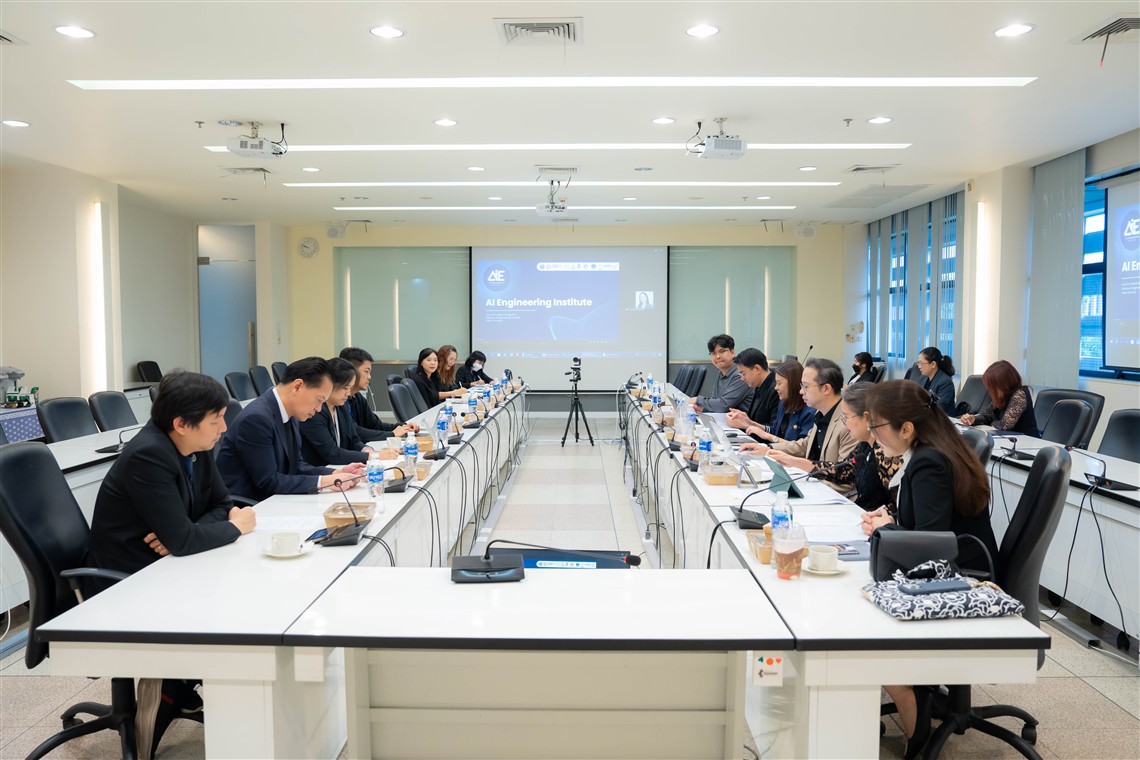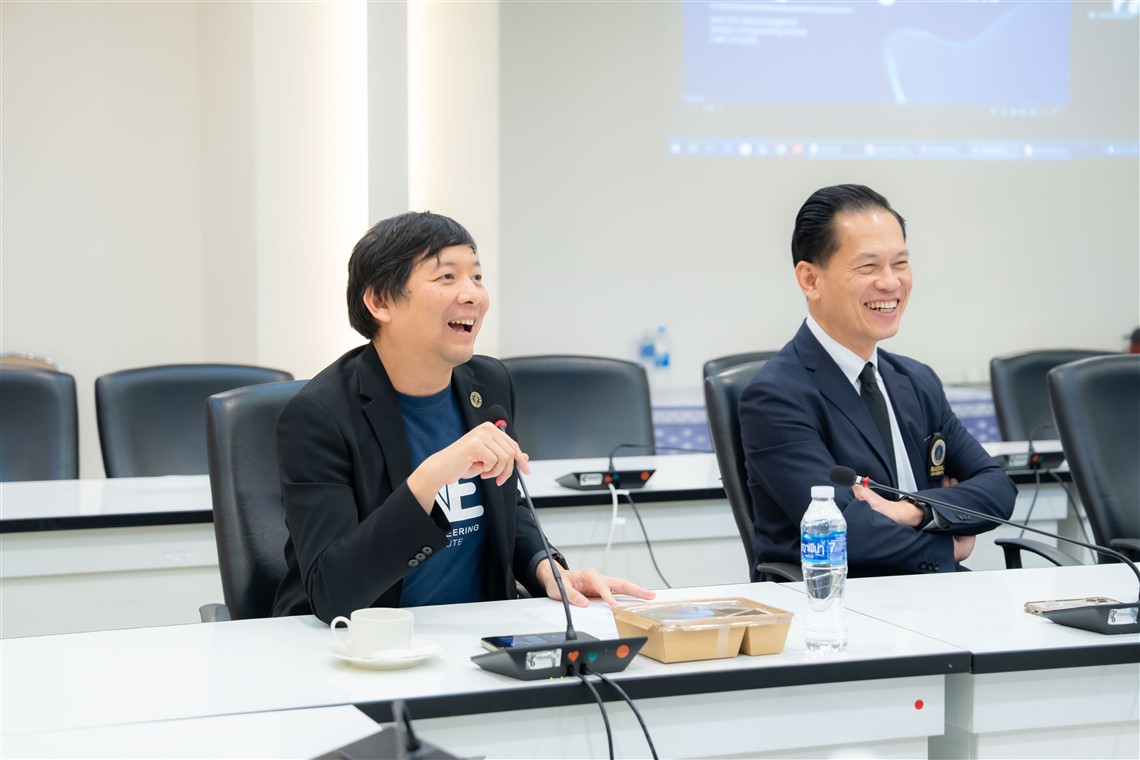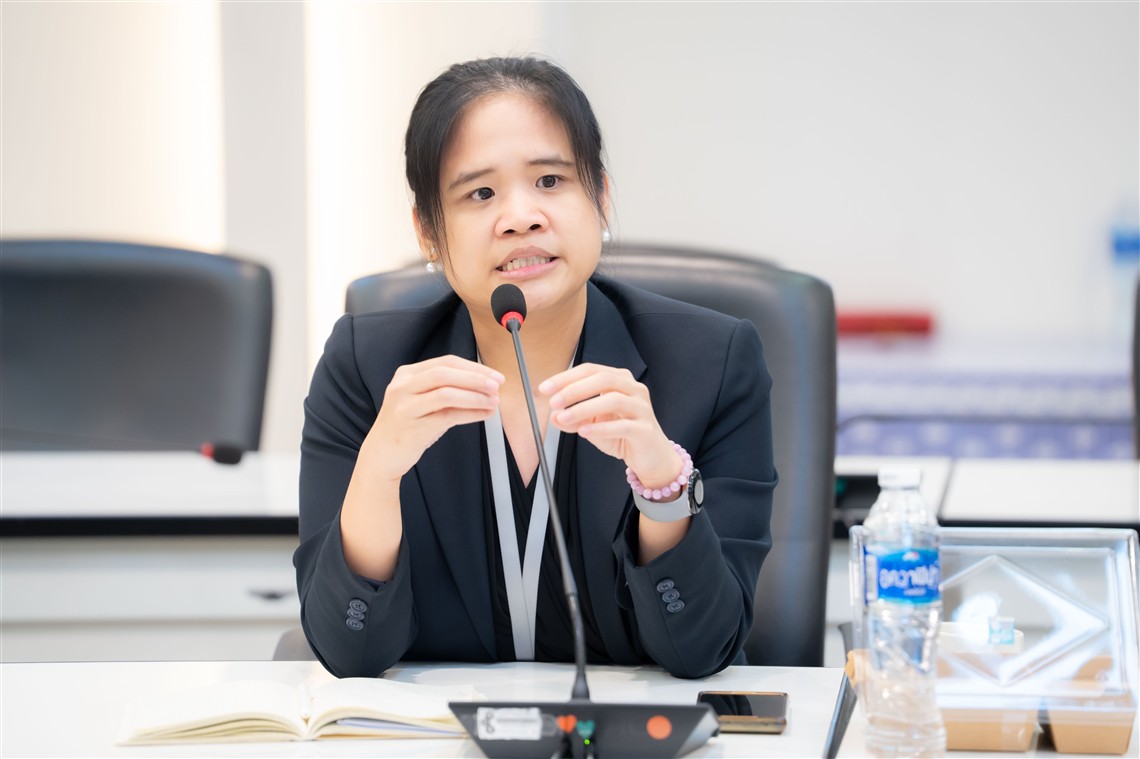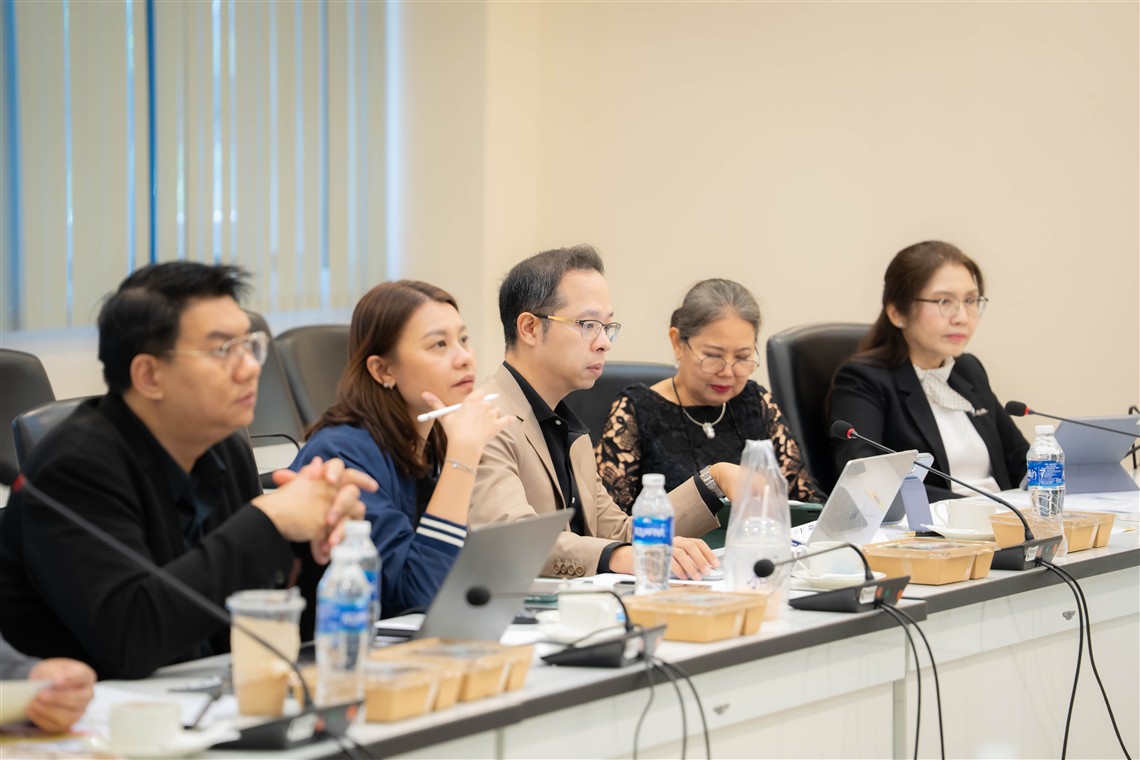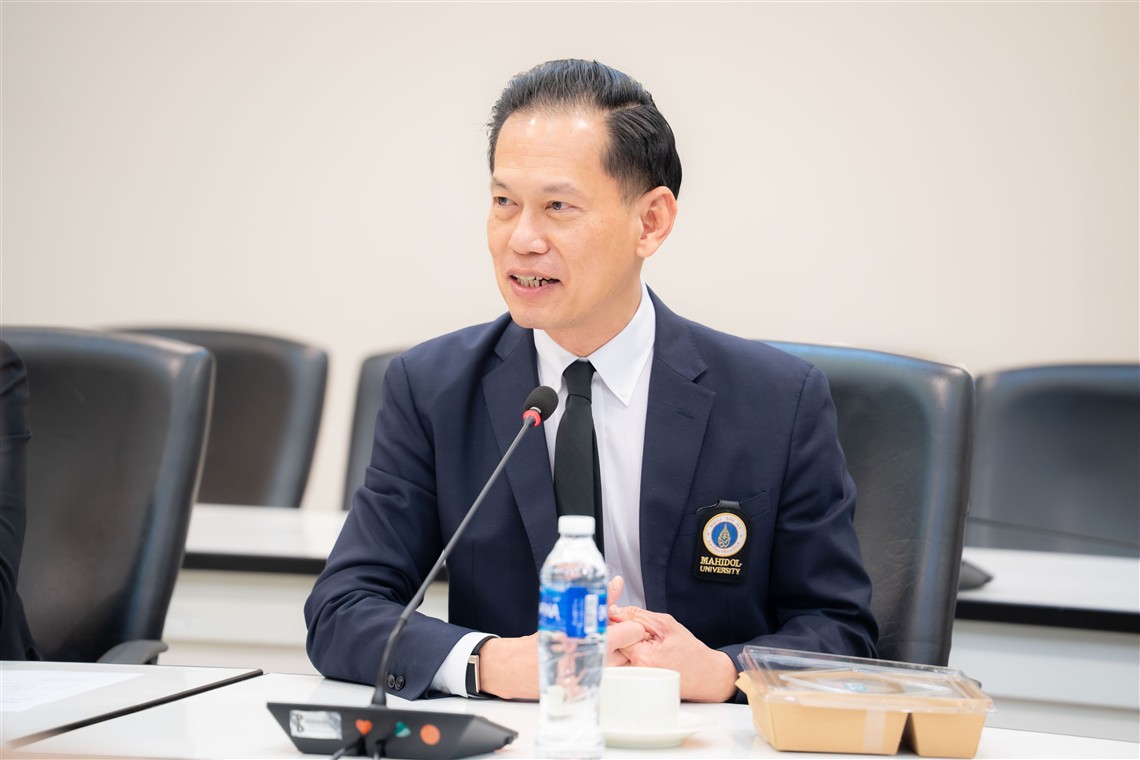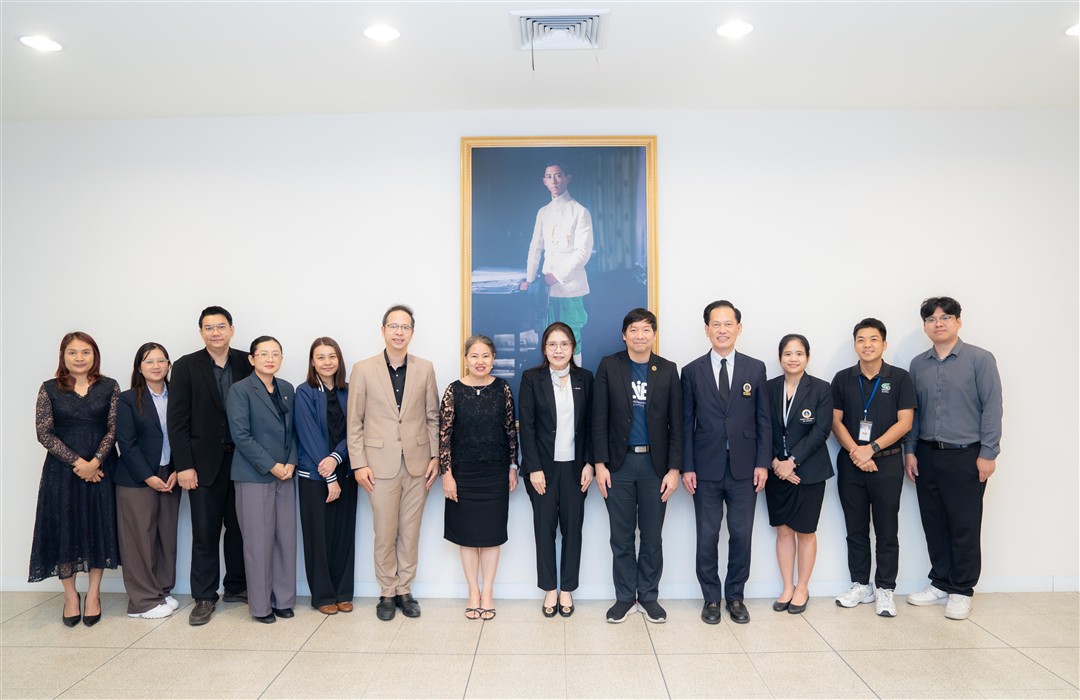
On February 13, 2026, the Faculty of Information and Communication Technology, Mahidol University (ICT Mahidol), led by Dr. Pattanasak Mongkolwat, Dean of the Faculty of ICT, and Asst. Prof. Dr. Siripen Pongpaichet, Assistant Dean for Information and Systems and Chair of the Bachelor of Science Program in Digital Science and Technology (DST Thai Program), together with program committee members, faculty members, and academic affairs staff, welcomed Prof. Phavanee Narataruksa, Chair of the Ad Hoc Subcommittee on Higher Education Innovation Promotion, Office of the Permanent Secretary, Ministry of Higher Education, Science, Research and Innovation (MHESI), along with subcommittee members. The delegation also included Asst. Prof. Dr. Akkarit Sangpetch, Director of the Artificial Intelligence Engineering Institute, CMKL University, and accompanying staff, who visited ICT Mahidol for the CMKL University Network’s Annual Program Monitoring for the Artificial Intelligence and Digital Engineering Program (Academic Year 2024). The monitoring visit focused on the Bachelor of Science Program in Digital Science and Technology (DST Thai Program), a Sandbox program in Artificial Intelligence and Digital Engineering under the CMKL University Network. The session was held in Room IT404, 4th floor, ICT Building, Mahidol University, Salaya Campus, and was also conducted online via Zoom.
Mahidol University has participated in the Sandbox Program in Artificial Intelligence and Digital Engineering under the CMKL University Network through the Bachelor of Science Program in Digital Science and Technology (DST Thai Program) since Academic Year 2022, in collaboration with five leading universities in Thailand. The network is led by CMKL University, in partnership with King Mongkut’s Institute of Technology Ladkrabang, Chiang Mai University, Prince of Songkla University, and Khon Kaen University.
The annual monitoring of the Sandbox Program in Artificial Intelligence and Digital Engineering under the CMKL University Network focused on reviewing the quality of competency-based education, strengthening collaboration with industry partners, and exploring approaches to developing highly skilled graduates aligned with labor market demands. The visit also assessed the program’s readiness to adapt to the rapid advancements in artificial intelligence technologies.