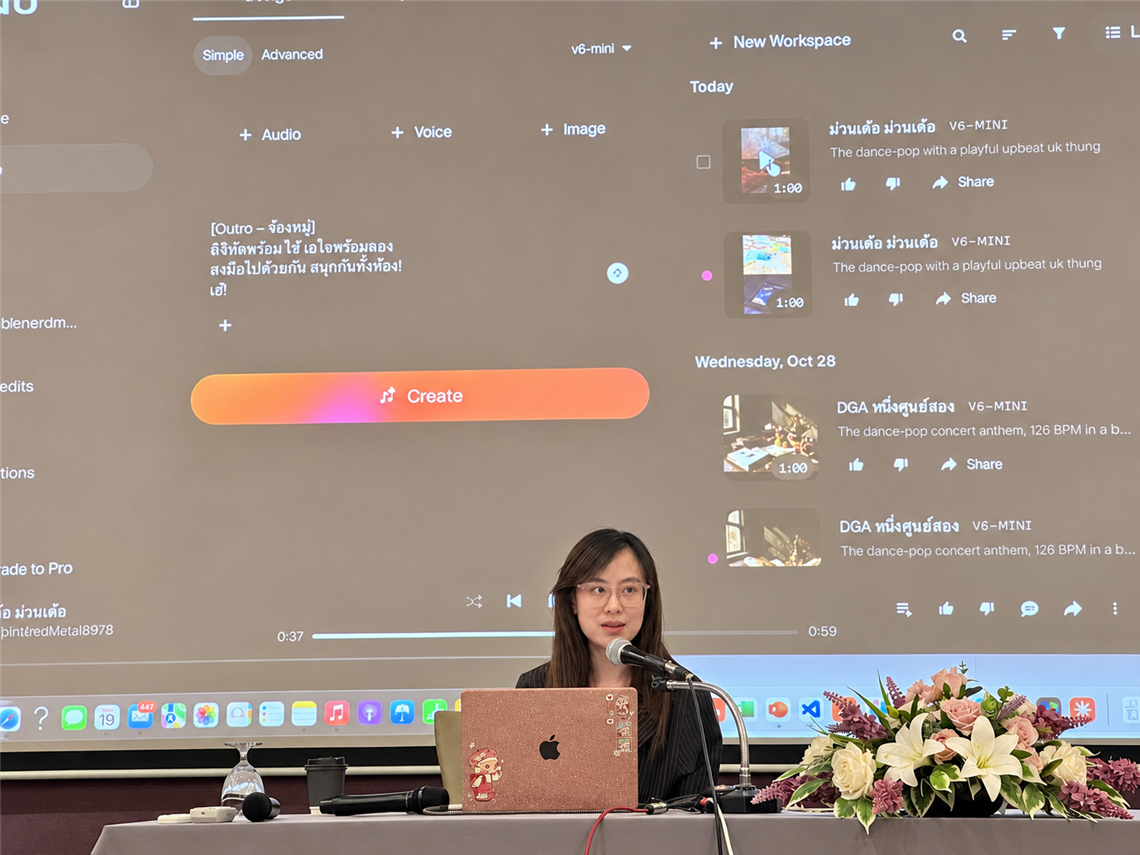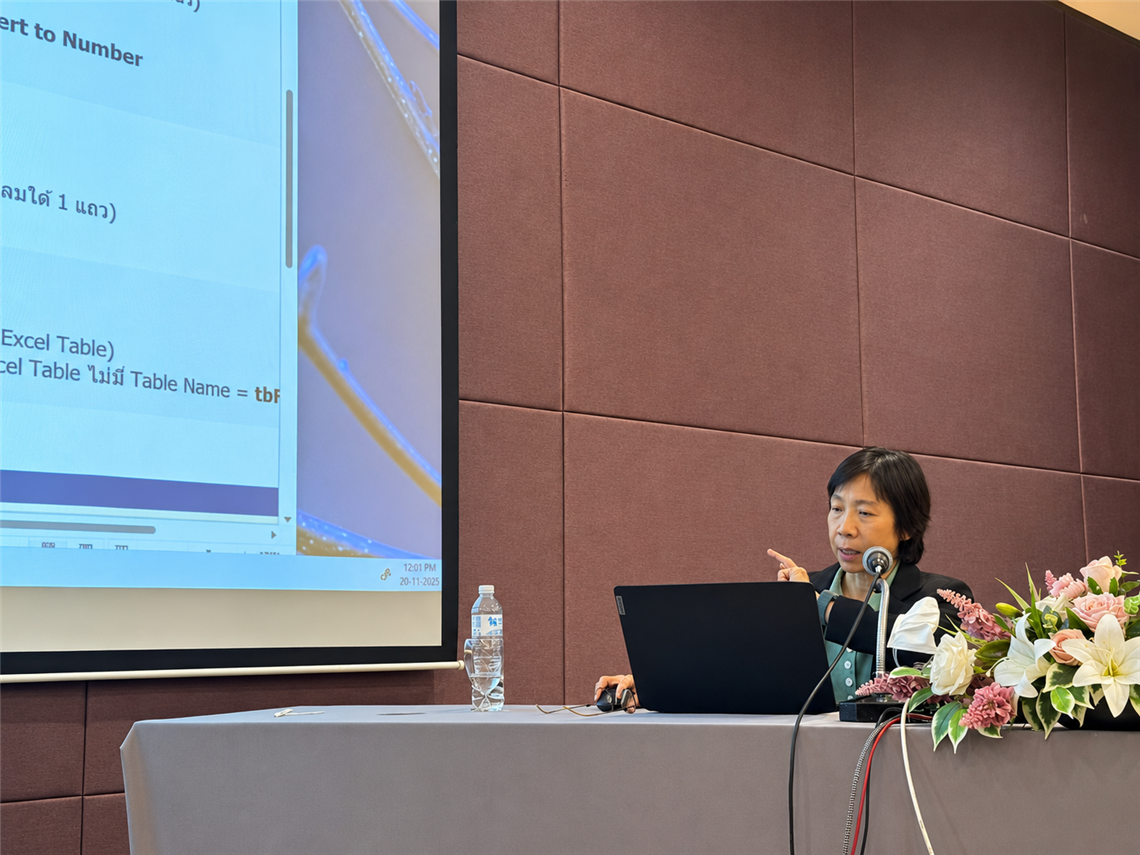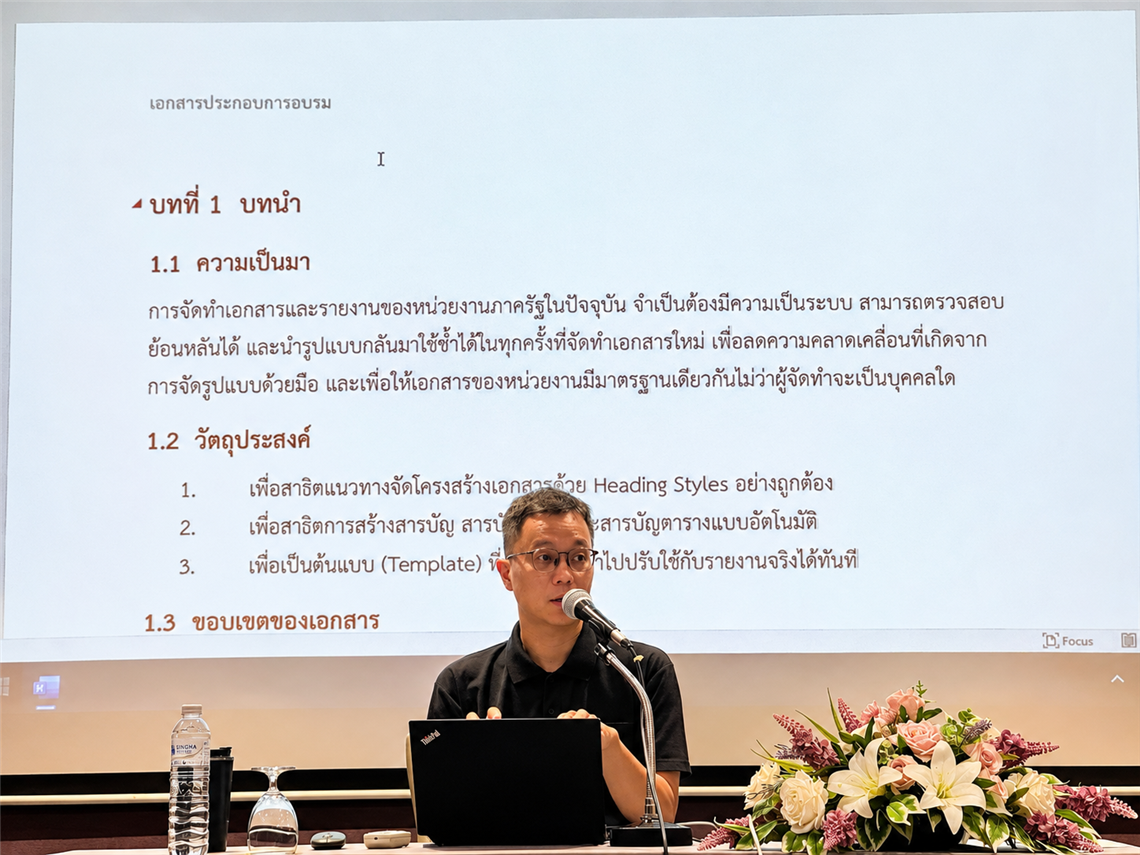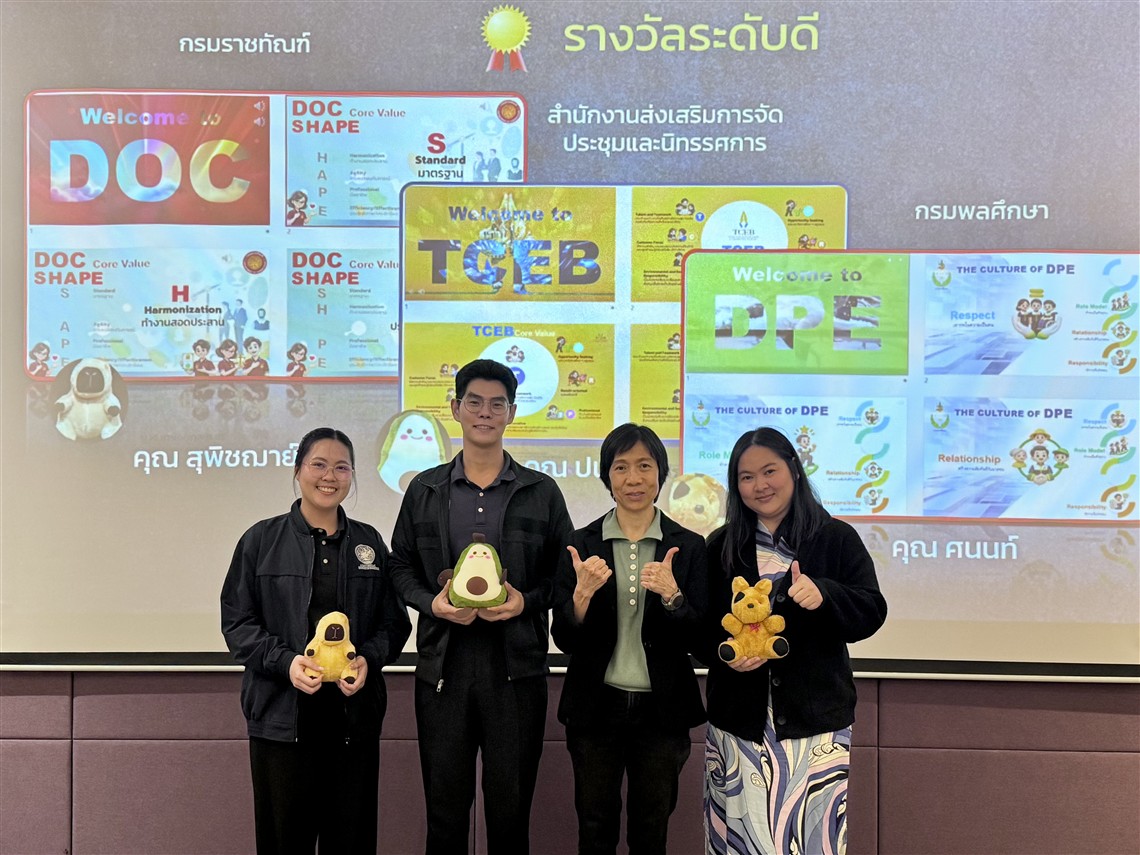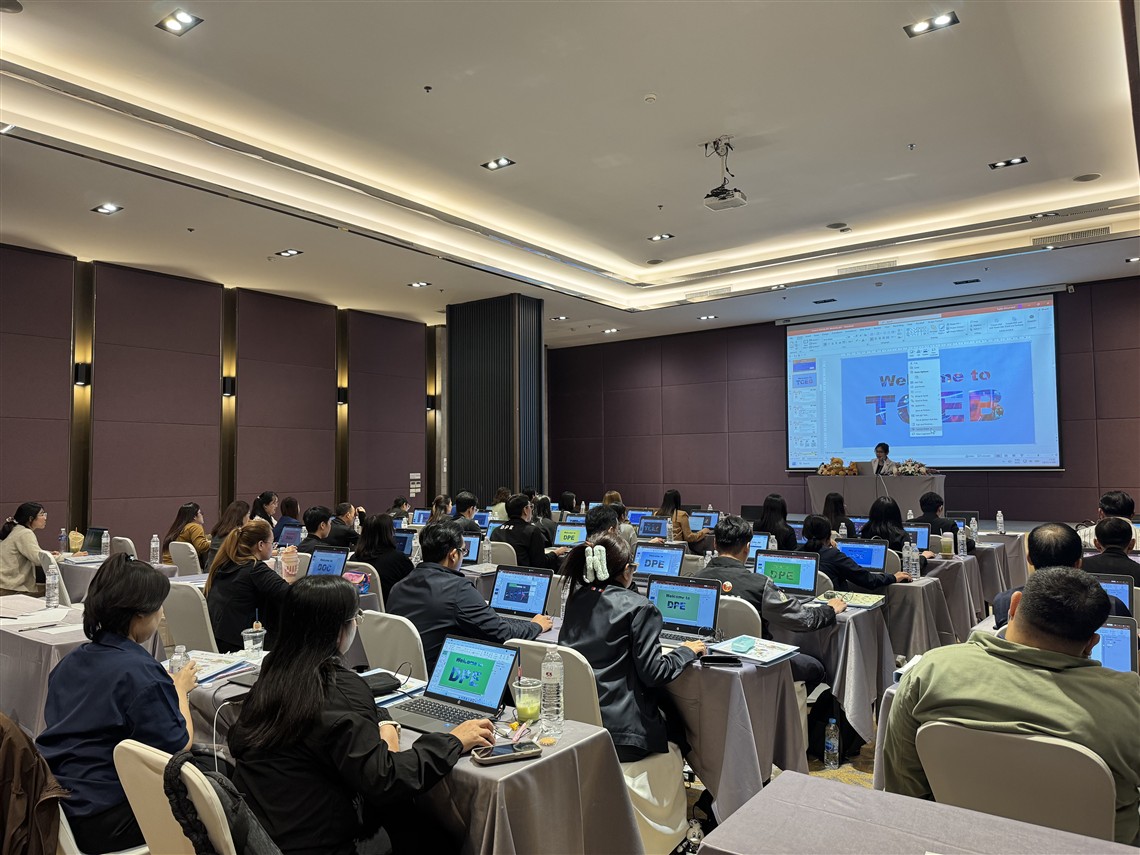
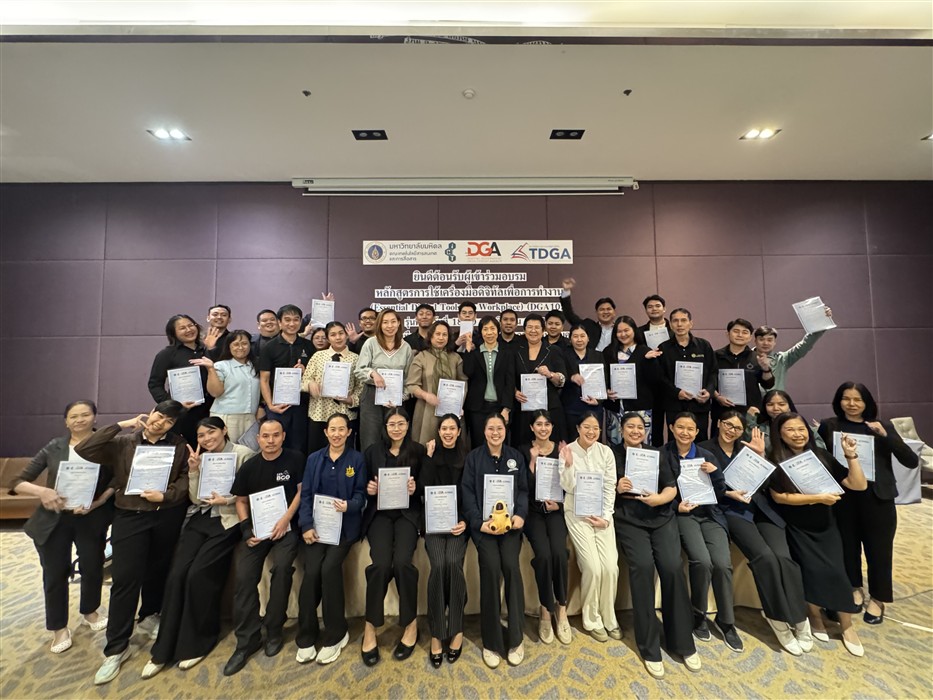
From November 18 to 20, 2026, the Faculty of Information and Communication Technology, Mahidol University (ICT Mahidol), in collaboration with the Thailand Digital Government Academy (TDGA), organized the fifth batch of the “Essential Digital Tools for Workplace (DGA102)” training workshop for Fiscal Year 2027. The program was attended by 46 government personnel and took place at TK. Palace Hotel & Convention, Bangkok.
The training sessions were conducted by Asst. Prof. Dr. Tipajin Thaipisutikul, Assistant to the President for Research, Mahidol University, and Instructor in the Computer Science Academic Group; Dr. Sujika Srinuntakul from the Policy and Quality Development Division; and Ms. Siriporn Rojanakosol and Mr. Prach Chaisiri from the Information and Systems Division. The speakers shared their knowledge and practical experience in using digital tools to strengthen digital skills and enhance workplace efficiency.
The “Essential Digital Tools for the Workplace (DGA102)” training workshop aimed to enhance the digital capabilities and competencies of government personnel, particularly those in non-IT roles, enabling them to select and apply digital tools effectively in their respective work environments. The training covered essential skills in document creation, communication, presentations, data management, data analysis, and data visualization to support informed decision-making and data-driven work practices. In addition, the workshop focused on strengthening participants’ knowledge and skills in applying artificial intelligence (AI) and Generative AI to various work activities, including document preparation, information summarization, meeting management, communication, and data analysis. It also emphasized the safe and ethical use of technology, data, and AI in accordance with cybersecurity principles, personal data protection requirements, and AI governance frameworks. The workshop further promoted a digital mindset, encouraging participants to select appropriate technologies based on their specific challenges and work contexts. Participants were encouraged to apply the knowledge gained to design and improve work processes, reduce unnecessary steps and duplication, enhance operational efficiency, and achieve tangible improvements in the quality of public services.