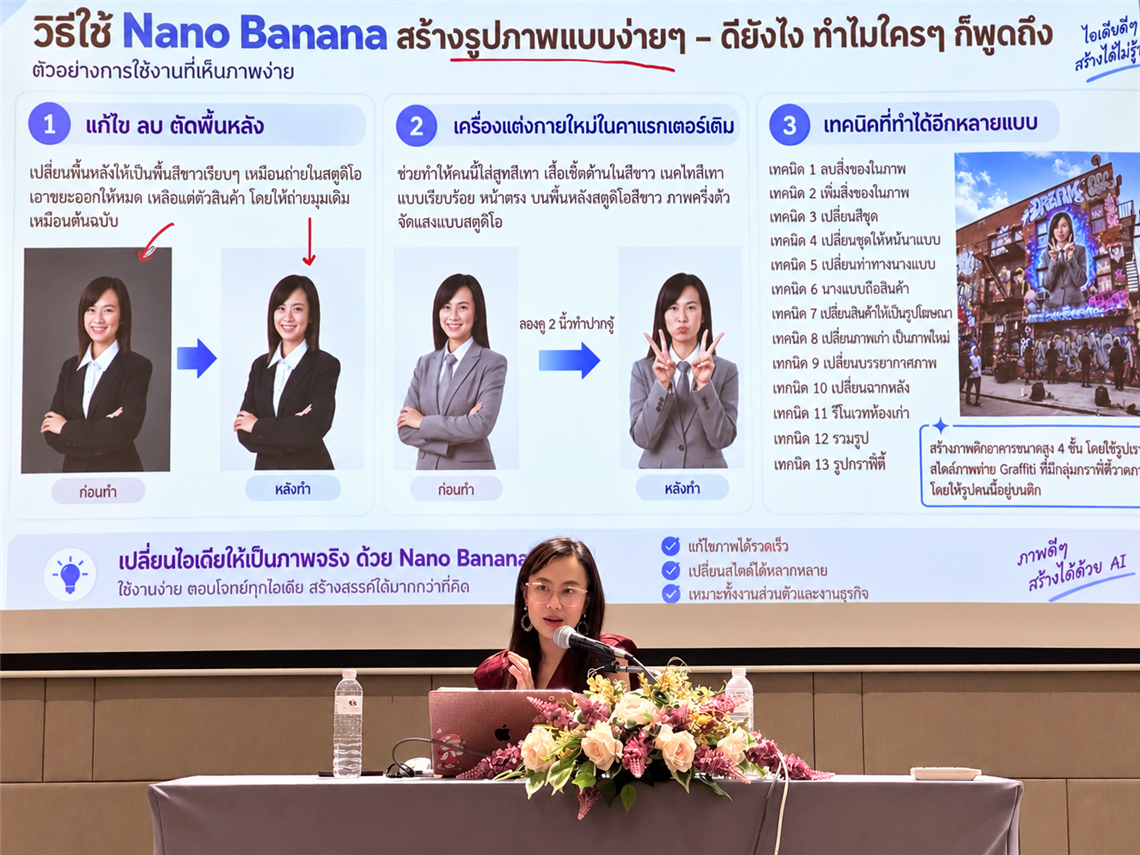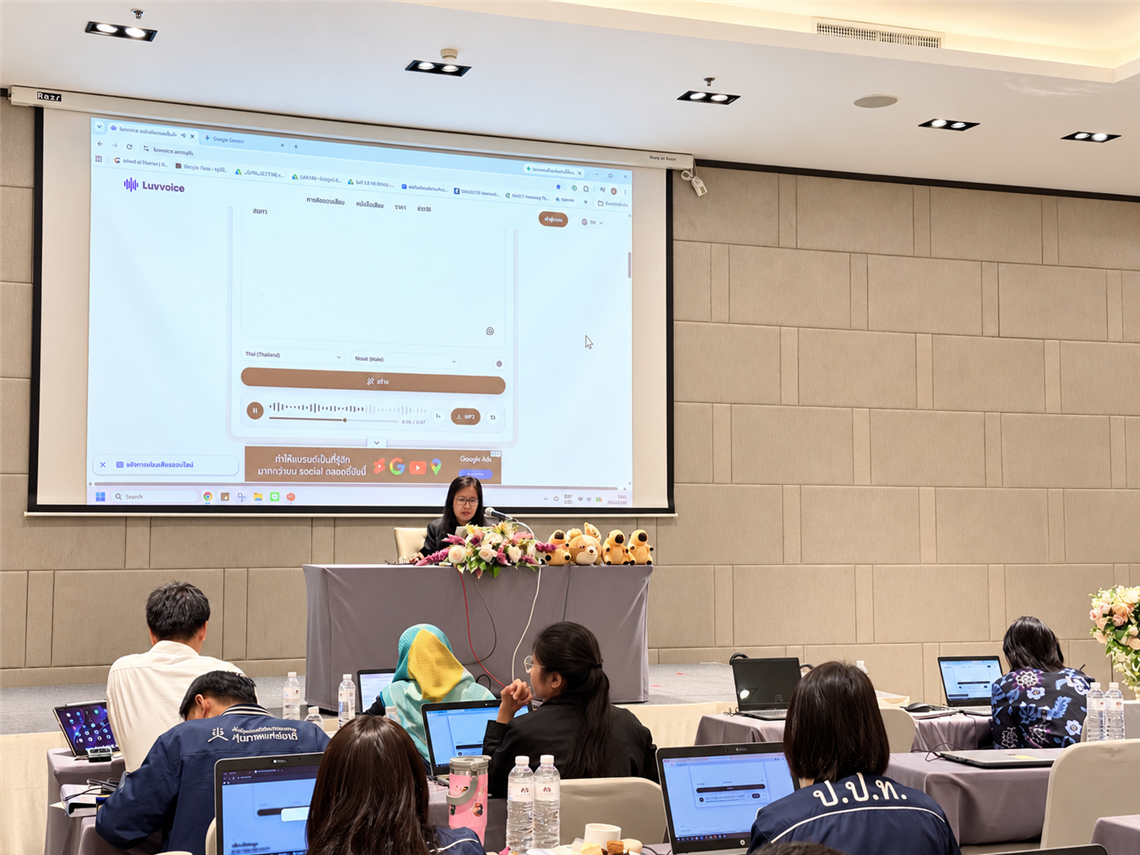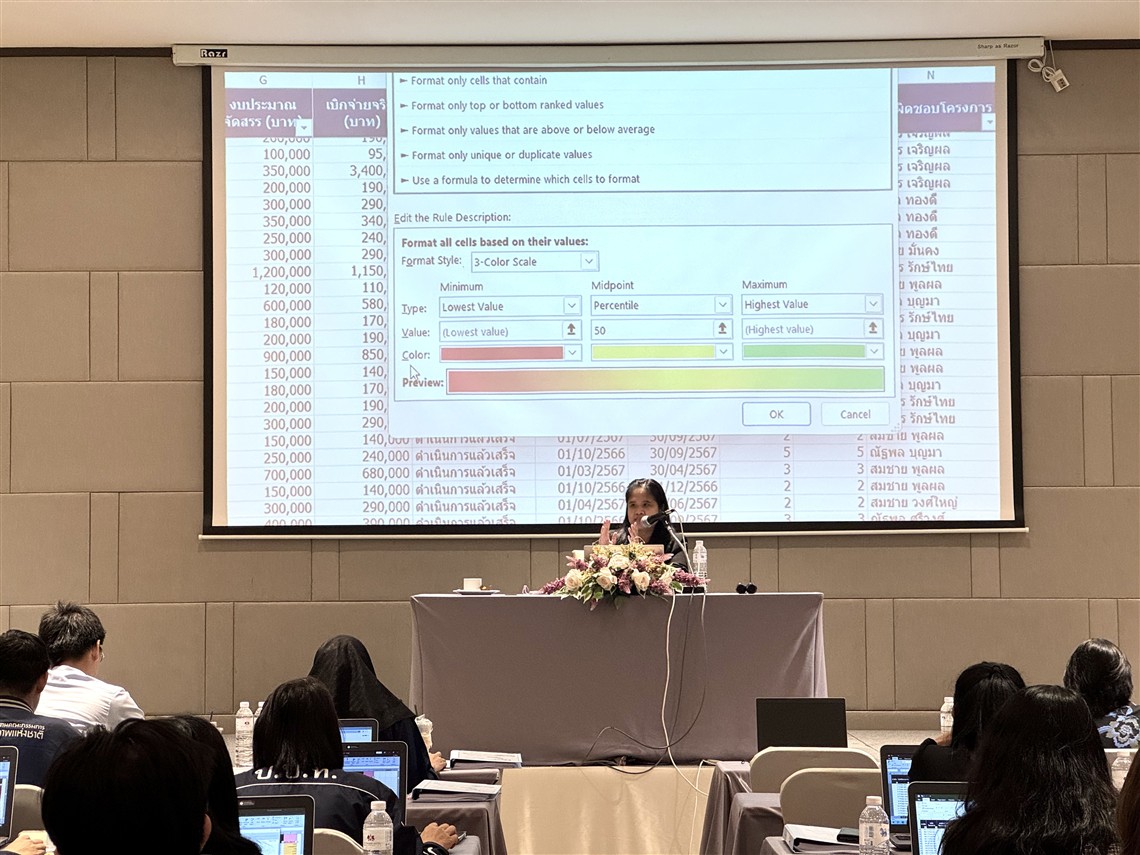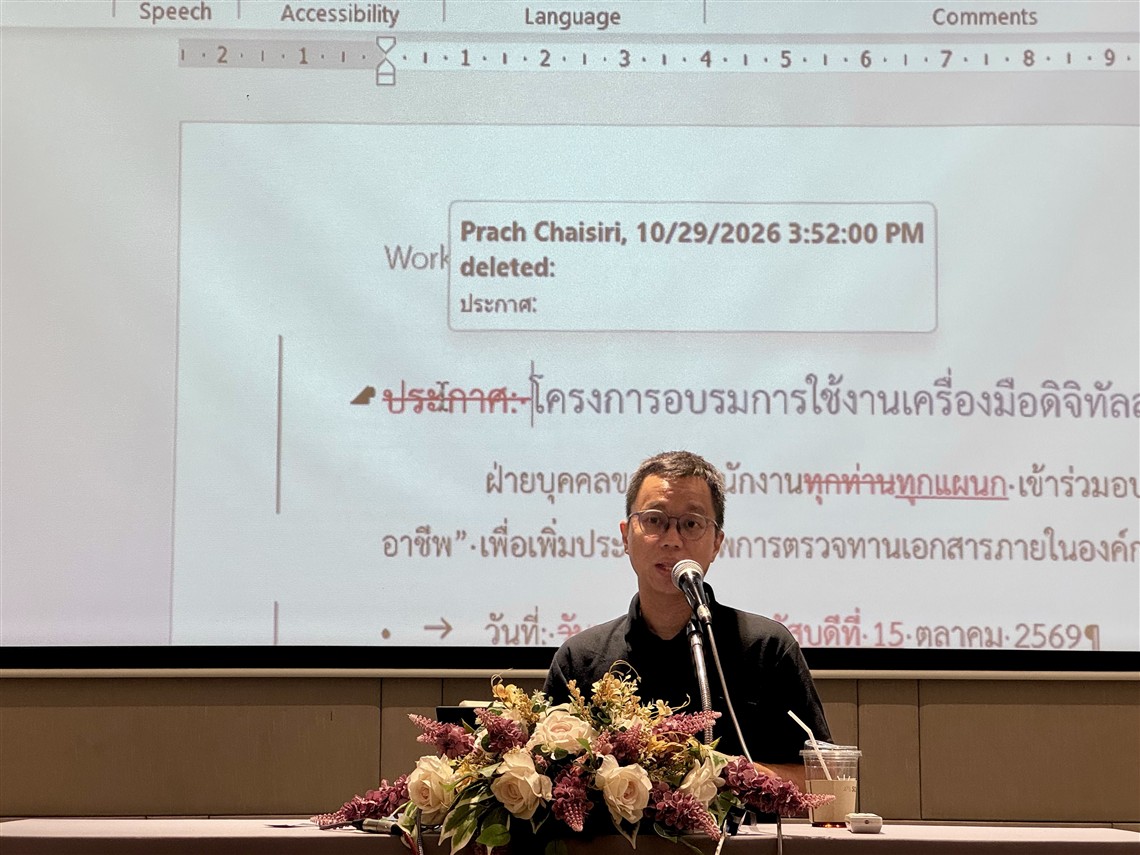
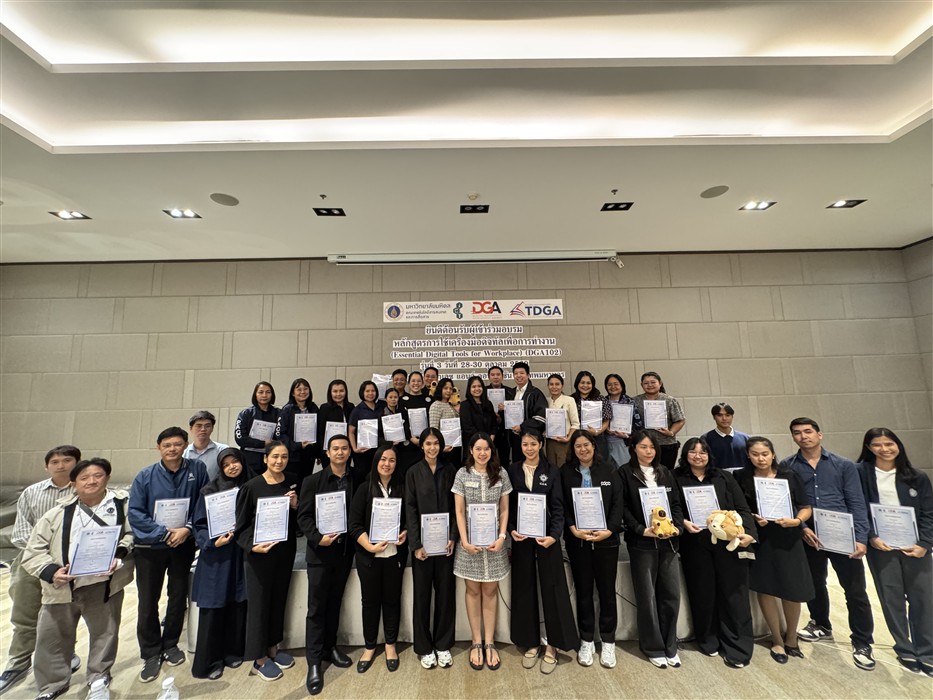
From October 28 to 30, 2026, the Faculty of Information and Communication Technology, Mahidol University (ICT Mahidol), in collaboration with the Thailand Digital Government Academy (TDGA), organized the third batch of the “Essential Digital Tools for Workplace (DGA102)” training workshop for Fiscal Year 2027. The program was attended by 43 government personnel and took place at TK. Palace Hotel & Convention, Bangkok.
The training was conducted by Asst. Prof. Dr. Tipajin Thaipisutikul, Assistant to the President for Research, Mahidol University, and Instructor in the Computer Science Academic Group; Asst. Prof. Dr. Siripen Pongpaichit, Assistant Dean for Student Affairs and Collaboration Networks; Dr. Sujika Srinuntakul from the Policy and Quality Development Division; and Mr. Prach Chaisiri from the Information and Systems Division. The speakers shared their knowledge and practical experience in using digital tools to strengthen digital skills and improve workplace efficiency.
The “Essential Digital Tools for the Workplace (DGA102)” training program aimed to enhance the digital capabilities and competencies of government personnel, particularly those in non-IT roles, enabling them to select and apply digital tools effectively in their respective work environments. The training covered essential skills in document creation, communication, presentations, data management, data analysis, and data visualization to support informed decision-making and data-driven work practices. In addition, the program equipped participants with the knowledge and practical skills needed to apply artificial intelligence (AI) and generative AI to various workplace tasks, including document preparation, information summarization, meeting management, communication, and data analysis. The training also emphasized the safe, responsible, and ethical use of technology, data, and AI in accordance with cybersecurity principles, personal data protection requirements, and AI governance frameworks.